Designing a maze for a laser tag arena
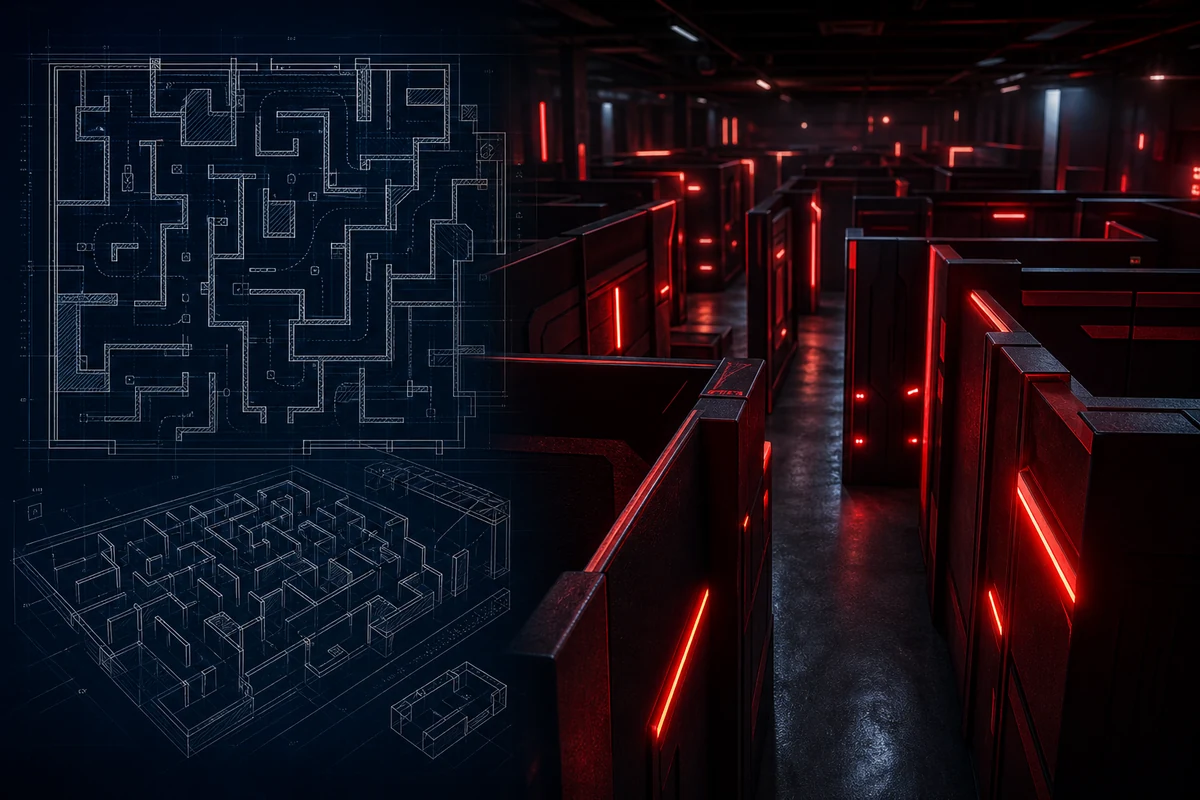
Zoning, passages, cover and lighting — how to design a rental laser tag maze for player flow and safety.
The maze is the heart of a laser tag arena. Layout drives game dynamics, throughput and the “movie feel” for guests. Design considers floor area, evacuation, lighting, AUL placement and CYBERTAG scenarios.
A weak maze will not save even top equipment: long dead ends without cover, blind camera spots and narrow corridors create queues and complaints. A strong one increases session length and repeat visits.
Core principles
- Zoning. Start, combat, bases, AUL points — no dead ends blocking evacuation. Fire routes must stay clear of decor.
- Passages. Corridor width for groups of 10–20 with vests and blasters; at least 1.2–1.5 m on main routes.
- Cover. Balance of open and closed zones so play is not “shooting in a hallway.” Varied obstacle height — kids and adults compete fairly.
- Lighting. Low ambient light plus accent floor and object lighting. Avoid unapproved strobes — epilepsy risk and a young audience.
Player flow
Design loops, not linear corridors: players meet and split constantly, no single dominant sniper spot. The briefing zone is separate from active play.
Place AUL so different routes lead to each point — team A and team B bases should not sit in adjacent alcoves with no cover between them.
Materials and safety
Impact-resistant panels, padding on sharp corners, non-slip flooring. Materials with fire ratings for authority approval. Fire safety and ventilation are mandatory before equipment purchase.
Area and capacity
200–300 m² — compact club for 10–15 players. For malls and high traffic, plan 400–800 m² or more: parallel mini-sessions or one large scenario for 25+ players. LaserArena designs turnkey arenas with 3D visualization before construction.
Common mistakes
- Too much decor “for looks” — gameplay and cleaning suffer.
- One large hall without partitions — boring games, long-range dominance.
- No waiting area for parents — family satisfaction drops.
Approvals first
Fire codes, finish materials, ventilation — mandatory before buying equipment. Plan and approvals first, then maze build and CYBERTAG delivery — that avoids costly rework.