How to choose equipment for rental laser tag
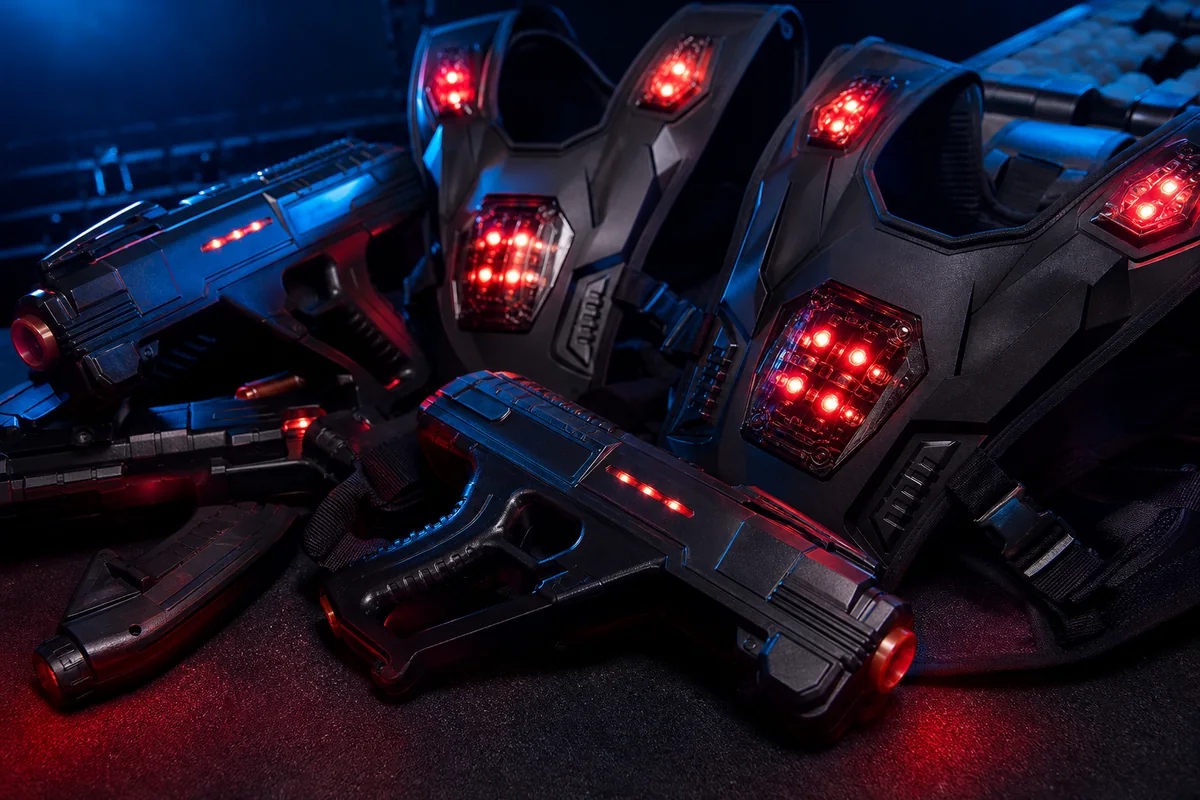
Blasters, vests, AUL, radio base, energizer and software — what matters when choosing a kit for intensive daily rental use.
Rental laser tag runs 8–12 hours a day. Equipment must survive thousands of games, charge quickly and keep stable radio links across the entire maze. The CYBERTAG system was designed for this mode — not for home play once a month, but for commercial operation with hundreds of sessions per week.
When choosing a supplier, look beyond kit price: spare parts lead time, local service and experience launching arenas in your format. Gear without support quickly becomes downtime on your busiest day.
Basic kit composition
- Blaster — safe laser class, ergonomics for kids and adults, hit feedback and remaining “health” indication.
- Vest — sensors around the body (back, shoulders, chest), impact resistance, quick strap adjustment.
- AUL — interactive field points: bases, medkits, turrets. Adds scenario depth and keeps guests for more than one game.
- Radio base — operator link to the fleet, start/stop, real-time stats.
- Energizer — simultaneous charging of dozens of sets between shifts; without it, the game–break–next group cycle stretches out.
- CYBERTAG software — scenarios, statistics, printed results, tournament brackets.
What to evaluate
Body durability. In rental mode blasters get dropped, vests are worn open, and 8–10 year olds are the toughest audience. Plastic and mounts must handle daily wear.
Runtime per charge. A 15–20 minute game should not end mid-round because of a dead battery. The real metric is how many full shifts a set handles on one charge cycle.
Turnaround between games. You have 5–10 minutes between groups: vests on/off, kit check, blasters issued. Faster rotation means more games per day and higher revenue.
Fleet scalability. Can you add sets and AUL without changing software and radio base? CYBERTAG lets you grow the fleet as load increases.
Supplier support. Operator training, remote diagnostics, spare parts stock. For malls, capacity matters — plan for peak hours (Saturday, holidays, school breaks), not just opening day.
Common buying mistakes
- Minimum fleet with no spare — queues at peak kill reviews.
- Skipping the energizer — idle time between games eats 20–30% of potential revenue.
- Ignoring software — without scenarios and stats the arena feels like “just shooting.”
Compare ready-made kits on the Business page. For sizing to your venue — request a consultation.